
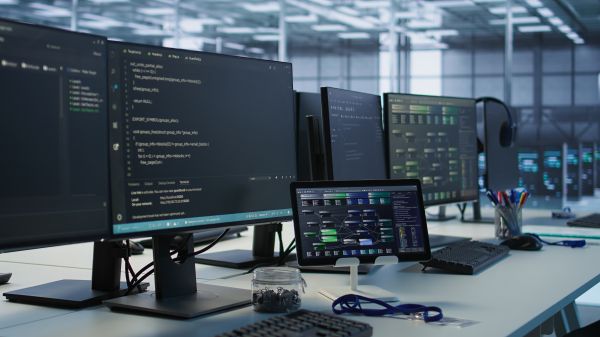
As we navigate through 2026, our reliance on digital infrastructure has reached an unprecedented level. From personal financial records and healthcare data to critical national infrastructure, almost everything is stored and transmitted digitally. This transformation has made cybersecurity the backbone of modern society. It is no longer just about protecting computers; it is about safeguarding our privacy, our economy, and our collective trust in technology.
The threat landscape has evolved dramatically this year. With the rise of "Agentic AI" and more sophisticated social engineering, traditional firewalls are no longer enough. Cybersecurity today acts as a dynamic shield, utilizing artificial intelligence to fight AI-driven attacks in real-time. Here is a deep dive into the critical role of cybersecurity in protecting our digital information today.
1. Guarding Against AI-Powered Threats
In 2026, cybercriminals are using generative AI to create highly personalized phishing campaigns and polymorphic malware. Cybersecurity systems have adapted by:
Defensive AI: Using machine learning to detect patterns of anomalous behavior that a human analyst might miss.
Automated Incident Response: Identifying and neutralizing threats in milliseconds, significantly reducing the "time-to-containment."
Deepfake Detection: Implementing advanced filters to verify the authenticity of voice and video communications in corporate environments.
2. Implementing Zero Trust Architecture
The old "perimeter-based" security model is obsolete. Modern cybersecurity follows the "Zero Trust" principle: Never trust, always verify.
Identity-Centric Security: Every access request—whether from inside or outside the network—is strictly authenticated and authorized.
Micro-segmentation: Dividing networks into small zones to prevent an attacker from moving laterally if they manage to break one entry point.
Continuous Monitoring: Real-time tracking of user sessions to ensure that credentials haven't been compromised mid-use.
3. Protecting the Global Supply Chain
A major trend in 2026 is the targeting of "service supply chains." Cybersecurity now extends beyond a single company to its entire network of vendors:
Third-Party Risk Management: Ensuring that every SaaS provider and software vendor follows the same rigorous security standards as the primary organization.
Software Bill of Materials (SBOM): Maintaining a detailed "ingredient list" of software components to quickly identify and patch vulnerabilities in open-source libraries.
4. Preparing for the Quantum Era
While still emerging, the threat of quantum computing breaking current encryption is a top priority for 2026:
Post-Quantum Cryptography (PQC): Organizations are beginning to transition to new encryption algorithms that are resistant to quantum-level processing power.
Cryptographic Inventory: Companies are mapping out their sensitive data to prioritize which information needs the strongest future-proof protection today.
5. The Human Element: Security Awareness
Despite all the technological advancements, the "human factor" remains the most common entry point for breaches. Modern cybersecurity focuses on:
Adaptive Training: Replacing boring annual slideshows with real-time, behavioral-based micro-learning.
Digital Hygiene: Encouraging the use of FIDO2 hardware security keys and biometric authentication to eliminate the weaknesses of traditional passwords.
Common Cybersecurity Myths in 2026
Clarifying these misconceptions is vital for effective protection:
Myth: "Small businesses are too small to be targeted." — Fact: Small businesses are often used as "backdoor" entries into larger corporate networks.
Myth: "Cloud storage is automatically secure." — Fact: Security is a "shared responsibility"; the provider secures the infrastructure, but you must secure your data.
Myth: "Antivirus software is enough." — Fact: Antivirus is just one layer; modern security requires a multi-layered, proactive ecosystem.
Conclusion
The role of cybersecurity has shifted from a reactive "IT problem" to a proactive "business imperative." In 2026, protecting digital information is the foundation of digital trust. As we integrate AI and automation deeper into our lives, the complexity of our defense systems must stay one step ahead of those who seek to exploit them. Cybersecurity isn't just a cost of doing business—it is the very thing that enables us to innovate, connect, and grow safely in a digital-first world. Staying informed and staying vigilant is no longer optional; it is essential.